StoneMemo

StoneMemo resources · For the U.S. & Canadian trade

A better brief.
A clearer path to production.

Practical guidance for specifying, reviewing and sourcing granite memorials. Start with the question in front of you, then bring the details of your project to our team.

From StoneMemo

From the StoneMemo journal.

01 / Custom projectsWrite a brief that leads to a useful quotation.

A photograph can start a productive conversation, but it rarely defines a complete order. It may show the face of a monument while leaving the thickness, back, base and carved depth unclear. A useful brief separates the parts you have already decided from the parts you want the manufacturer to help resolve.

Describe the job before describing the stone.

State whether you are sourcing stock for your business, developing a showroom piece or quoting a particular cemetery project. Include the approximate quantity and delivery location in the United States or Canada. If the project has a required installation date, identify it as a planning constraint; do not assume that production completion and arrival are the same milestone.

Give each proposed product a reference of its own. For a mixed order, a simple line-item list is easier to review than a sequence of loosely labelled photographs. Keep related images, dimensions and notes under the same reference so that later revisions do not become detached from the correct piece.

Make the dimensions unambiguous.

Identify the unit and the dimension order. Record the tablet, base and any additional stone components separately. If a drawing uses width × depth × height, keep that convention throughout the brief. Do not assume that an overall height specifies the height of the upright tablet alone.

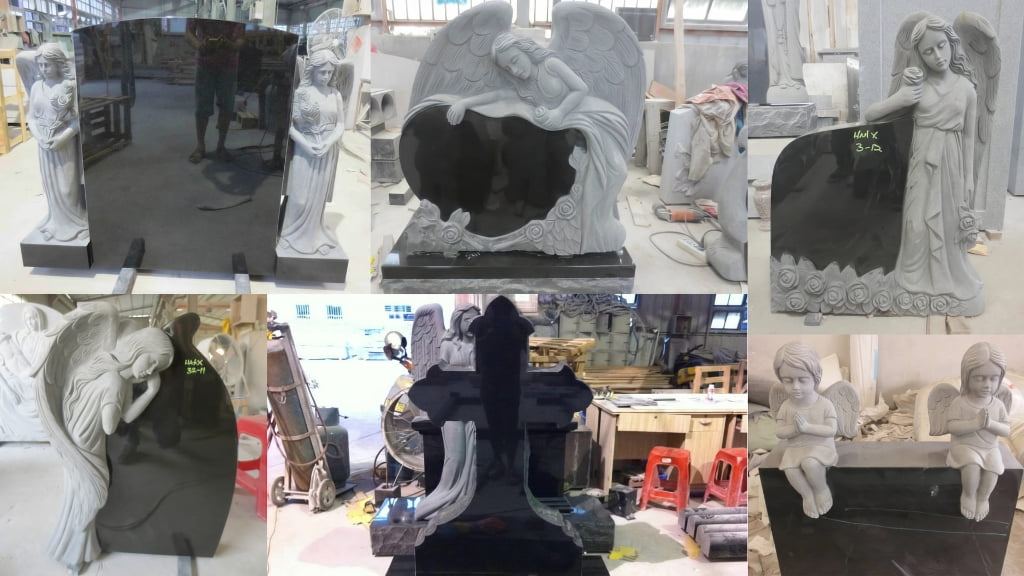
For complex carving, send more than a front view when possible. Side and rear references help explain the depth and shape. Mark the features that must remain: an angel’s pose, the position of the wings, the number of hearts, the inscription area or the relationship between a figure and the base.

Separate requirements from preferences.

  • Required: fixed dimensions, cemetery restrictions, inscription space, essential design elements and quantity.
  • Preferred: stone colour, surface treatment or details that can be discussed.
  • Open: questions you need help resolving, including component arrangements or alternative approaches to the carving.

A reference image may contain details you do not want. Say so directly. “Use this wing arrangement, with a different heart shape” is more useful than “something like this.” If several references are combined, annotate the feature to take from each instead of asking the manufacturer to infer the intended result.

Check the quotation against the brief.

When a quotation returns, compare its scope with your line-item list. Check which components, stone, finish and artwork are included; identify anything still provisional. Keep the quotation and the latest agreed drawing together so that a price from one version is not mistaken for the price of another.

Your next step: send the product references, approximate quantities and the decisions already made. If the brief is incomplete, identify the questions you want us to work through with you.

02 / Material selectionChoose granite and finish as one decision.

A colour name is a useful starting point, but it does not show how a complete memorial will read. Grain, movement, surface finish and the contrast around an inscription all affect the result. Select the stone alongside the design rather than treating it as a colour choice made after the shape is fixed.

Compare like with like.

Start with correctly labelled material examples. A polished sample and a carved surface may look quite different even when they are the same stone. Photographs also depend on lighting, camera settings and the screen used to view them. Avoid treating a website image as an exact colour standard.

If a particular appearance is important, ask which sample or reference will be used for the order and how it should be compared. For matching work, supply clear photographs of the existing memorial and explain how close the new component will sit to it. A stone name alone may not settle the visual match.

Map the finish to each component.

“Polished monument” leaves several questions open. Does it refer to the face only, the back, the top, the edges or the base as well? Use a marked drawing or a component list to identify the finish on each visible surface. Keep the terminology consistent between the drawing and quotation.

Where polished areas meet sculpted or textured areas, include a reference that shows the transition you prefer. For an angel monument, review the figure and the polished inscription panel together. For a simple marker, review the face and edge treatment together. Small differences become more noticeable when repeated across an order.

Consider the inscription early.

Share the lettering and artwork requirements before the specification is final. Ask how the proposed treatment will read against the selected stone and surrounding finish. If a portrait, detailed ornament or particular lettering style is central to the design, make it part of the material discussion.

  • Confirm the material name used on the quotation.
  • Identify whether the pictured memorial uses one stone or several.
  • List the intended finish for the tablet, base and other components.
  • Flag matching requirements and acceptable visual variation.
  • Resolve undecided inscription or artwork treatments before final approval.

For a multi-stone design, identify which material belongs to each component. A listing that mentions two granites is not enough to establish that every component can be made in either one. Check the design, dimensions and availability together.

Your next step: choose a product reference and a material direction, then tell us what appearance matters most. We can discuss the stone and finish against the actual design requirements.

03 / Design confirmationReview the drawing before the details become stone.

Approval is more useful when it means “this exact version has been checked” than when it means “the general idea looks right.” A production drawing should make the component arrangement and design requirements clear enough for everyone involved to refer to the same specification.

Check the piece as an assembly.

Begin with the model reference, drawing revision and units. Check the overall arrangement, then review the dimensions of each component. Confirm the relationship between tablet and base, the position of separate elements and the surfaces that will be visible. Identify where a drawing is schematic rather than a detailed description of the finished carving.

Complex sculpture deserves a separate discussion about the features a dimensioned front view cannot explain. An angel’s face, hands, wing shape and the transition between carved elements may need additional views or agreed visual references. Specify which aspects of those references are part of the requested design.

Read the inscription as final text.

Proofread names, dates, punctuation and wording directly against the authorised text. Do not rely on memory or assume that a previous draft was already checked. Give special attention to numerals, similar-looking letters and deliberate spelling. Identify who is authorised to approve the final inscription.

Review the layout at a readable scale. Check line breaks, spacing, alignment and the relationship between text and ornament. If the memorial has two inscription areas, make sure the names and dates are assigned to the intended sides. Future inscription space should be discussed explicitly rather than inferred from a blank area.

Name the process and finish.

Sandblasted lettering, sculpted ornament and other artwork treatments should not be used as interchangeable descriptions. Ask for clarification where a reference image leaves the method unclear. Keep the selected stone and finish visible in the approval record so that artwork is not reviewed without its material context.

  • Verify the product reference and latest revision.
  • Check every component, dimension and unit.
  • Proofread all inscription text and confirm its placement.
  • Identify the intended artwork method and finish.
  • Record remaining questions before giving approval.

Keep one current version.

When you request a change, describe it against the relevant reference and revision. Ask for the revised details to be reflected in the next confirmation rather than relying on a separate message that can be missed. A verbal agreement, a marked screenshot and an older PDF should not leave three competing versions of the order.

Your next step: send the reference and the points still unresolved. We can discuss what needs clarification before the specification is confirmed for your quotation or order.

04 / Quality reviewAsk for an inspection record you can actually use.

A clear inspection photograph answers a specific question. A large folder of unlabelled photographs may show that work took place while still leaving you unsure whether the correct dimensions, inscription or components were checked. Define the evidence you need around the agreed order.

Start with the reference list.

For each line item, identify the model, stone, quantity, drawing revision and relevant components. Use those same references in the inspection record. If an order includes similar memorials with different dimensions or inscriptions, make the distinction visible in the labels.

Agree which checks are required and how they will be recorded. A photograph of a tape measure is useful only when the measured component, measurement points and unit are clear. Do not infer an unshown dimension from another photograph or treat a perspective view as a reliable dimensional measurement.

Separate dimensions, appearance and completeness.

Dimensions concern the size and arrangement of the components. Appearance concerns the stone, finish, lettering and carving relative to the agreed reference. Completeness concerns whether the specified components and quantities are present. Keeping those questions separate makes it easier to identify what an image or record actually proves.

For sculpted work, request views that let you examine the form from more than one angle. A front photograph can conceal the depth of a wing or the transition behind a figure. For lettering, include an overall view for layout and closer views for details that cannot be read at a distance.

Make any exceptions explicit.

  • Record the product reference and the issue under discussion.
  • Compare it with the current agreed drawing or visual reference.
  • Describe the required clarification or correction.
  • Keep the follow-up evidence linked to the same item.
  • Confirm who will review the resolution before the next agreed step.

Discuss the inspection scope early. A sample-based check and a check of every item are different arrangements; neither should be assumed from a phrase such as “quality inspected.” Where acceptance criteria or tolerances matter, define them in the order discussion instead of introducing them after production.

Connect the record to packing.

Ask how product references will be associated with packing identifiers so the receiving team can reconcile what arrives with the order. The inspection record and packing list serve different purposes, but they should be easy to connect. Keep both with the final specification and shipment documents.

Your next step: tell us which dimensions, design details and inspection evidence matter to your project. We can discuss the review requirements when defining the order.

05 / Shipment planningClarify packing, delivery and receiving responsibilities.

“Shipping included” is not a complete delivery plan. A professional buyer needs to know the destination covered, the services included and who handles each stage. Resolve those questions alongside the product specification so that the receiving team can prepare for the actual shipment.

Define the destination precisely.

Give the delivery city and postal or ZIP code, then identify whether the destination is a port, terminal, warehouse, monument shop or project site. Explain any access restrictions, booking requirements or limits on receiving hours. A cemetery installation site may have different access conditions from a commercial warehouse.

Identify who will arrange unloading and what facilities are available. Ask for the package dimensions and weights needed to plan appropriate handling with the receiving team. Do not assume that a quoted freight service includes unloading, placement, installation or any particular equipment.

Put the scope in writing.

The quotation should identify the agreed delivery scope and the responsibilities that remain with each party. If an Incoterms® rule is used, state the rule, named place and version, and clarify how it applies to the actual shipment. The ICC describes these rules as allocating important buyer and seller responsibilities, costs and risks in B2B transport and delivery arrangements. They are a reference for the discussion, not a substitute for reading the complete quotation and contract.

  • Which transport stages and destination charges are included?
  • Who arranges customs formalities and any required local services?
  • What insurance, if any, is included, and what documents describe it?
  • Who books delivery and arranges unloading?
  • Which documents will the buyer and receiving team receive?

Connect packages to the order.

Ask for packing identifiers that can be reconciled with the product list. Where a memorial has several components, clarify how they are grouped and identified. Discuss any handling or orientation information that needs to accompany the shipment, and pass it to the people who will receive it.

Separate the production schedule from the shipment schedule. Production completion, cargo handover, vessel departure and final delivery are different milestones. Ask which dates are confirmed, which are estimates and how changes will be communicated. Weekly factory capacity does not, by itself, establish the lead time for an individual order.

Prepare a receiving record.

Before delivery, agree how discrepancies or visible concerns should be documented and reported under the applicable order and carrier arrangements. Keep the package labels, delivery paperwork and relevant photographs together. Ask about the agreed reporting process rather than assuming a universal claim period or automatic remedy.

Your next step: include the destination and receiving conditions in your enquiry. We can discuss the delivery scope needed for a useful quotation.

Trade-term reference: International Chamber of Commerce — Incoterms® rules.
06 / Cremation & estateStart with the intended use, then choose the structure.

Two memorial structures can look similar in a photograph while serving different purposes. Begin by describing what the project must accommodate, how it will be used and where it will be placed. The external shape comes after those requirements are understood.

Separate the main product types.

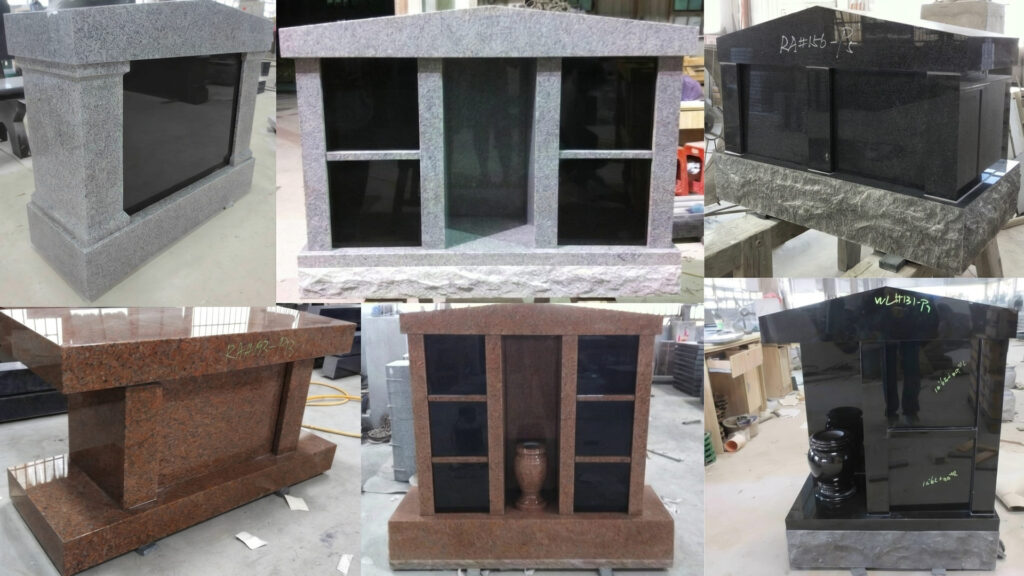
A columbarium is a structure containing niches for cremation urns. A cremation bench combines a memorial seating form with a designated space for cremated remains. A conventional memorial bench should not be assumed to have such a compartment simply because its shape resembles a cremation model.

An urn is the container itself. A cremation monument may incorporate a space for an urn within a monument form. The material, external dimensions and usable internal space are separate specifications and should be confirmed for the chosen design.

An estate mausoleum is a different project category from a columbarium. If the project combines casket entombment, cremation niches or other components, identify each intended function. Do not infer the internal arrangement from the term “estate memorial” or from the appearance of the exterior.

Define the usable space.

State the number of urns or other spaces required and the dimensions that must be accommodated. For a niche, confirm usable internal dimensions and the access opening; external cabinet dimensions alone do not answer those questions. Explain whether a project is intended for one family or for repeated access across multiple niches.

Ask how the enclosure, closure and identifying elements are configured for the proposed product. If replaceable components or future additions are important, make them part of the discussion. Avoid assuming that products from different configurations use interchangeable parts.

Bring in the site requirements.

  • Identify the cemetery or project location and the intended placement.
  • Obtain the applicable site requirements from the responsible operator.
  • Clarify which party provides site preparation, foundation design and installation planning.
  • Identify access, delivery and handling constraints.
  • Confirm what drawings and product information the local project team needs.

A manufacturer's product information and a site's approval are different things. Where structural design or installation requirements apply, coordinate them with the responsible local professionals and cemetery before finalising the order. A catalogue picture cannot establish suitability for every location in the United States or Canada.

Quote a defined configuration.

Keep the intended use, internal capacity, component arrangement, material and exterior design together in the request. If some details remain open, label them clearly. That allows the manufacturing discussion to resolve a real project instead of comparing prices for superficially similar structures.

Your next step: describe the intended use and site, then share the capacity and dimensions you need. We can discuss the information required to define a cremation or estate enquiry.

Have a project to work through?

Send the references and requirements you already have. Tell us where you need clarification, and we will help define the manufacturing discussion.

Request a trade quote