
For a monument dealer’s artwork order, laser etching generally suits detailed surface imagery, while sandblasting can produce recessed lettering and carved designs. Neither is the best choice for every memorial. Match each part of the approved artwork to the proposed granite and finish, consider combining methods, and approve the layout separately from the finished appearance.
For a monument retailer, the useful question is what the finished design needs to show. A portrait, a family name and a carved border do not necessarily need the same treatment. Choosing the machine first can leave the artwork working around an avoidable limitation.
What is the difference between laser etching and sandblasting?
Laser etching uses laser energy to mark the stone surface. Sandblasting directs abrasive material through exposed areas of a protective stencil. Summit Memorials explains engraving and etching in terms of deeper engraved lettering and shallower, finer etched work. Its explanation also distinguishes hand etching from laser etching; the word “etching” alone does not identify the equipment used.
| Design requirement | Method to evaluate | What to check on a sample |
|---|---|---|
| Portrait or detailed scene | Laser etching | Facial definition, tonal separation and recognizable details |
| Recessed names and dates | Sandblasting | Letter openings, edges, readability and agreed depth |
| Decorative borders or relief | The specified carving process | Shape and depth of the actual effect |
| Portrait plus prominent lettering | A combination | Clear boundaries and a consistent overall composition |
This table is a starting point for discussing a design, not a promise that a particular machine will reproduce every file. Sandblasting can create different effects and depths. A purchase order that says only “sandblasted” leaves important appearance decisions open.
Is one method better for the whole headstone?
Often the better specification evaluates text and imagery separately. Picture This On Granite describes combining sandblasting and laser engraving. That establishes a practical option; it does not establish that every fabricator offers the same service.
Consider an illustrative design with a portrait above large family lettering. The portrait may call for fine tonal detail, while the lettering needs a clearly recessed appearance. Ask the proposed supplier to assess each area and show the combination on comparable material. If a simpler single-process design meets the same requirements, compare it on that basis.
Divide the drawing into three groups before requesting a proposal:
- Text: names, dates, smaller inscriptions and their visual hierarchy.
- Images: portraits, landscapes and details that must remain recognizable.
- Decoration: borders, emblems and any areas where relief is expected.
Ask the supplier to identify the actual process for each group, including any artwork changes it needs. Do not assume that a quotation for laser etching includes hand shadow carving, or that a quotation for lettering includes all decorative work.
Why do granite and finish matter?
A sample on one granite is not automatic approval for another. Specify the material, the decorated surface and its finish alongside the artwork. A stone’s visible pattern can compete with fine image detail, while lighting and screen settings can change how a photographed sample appears.
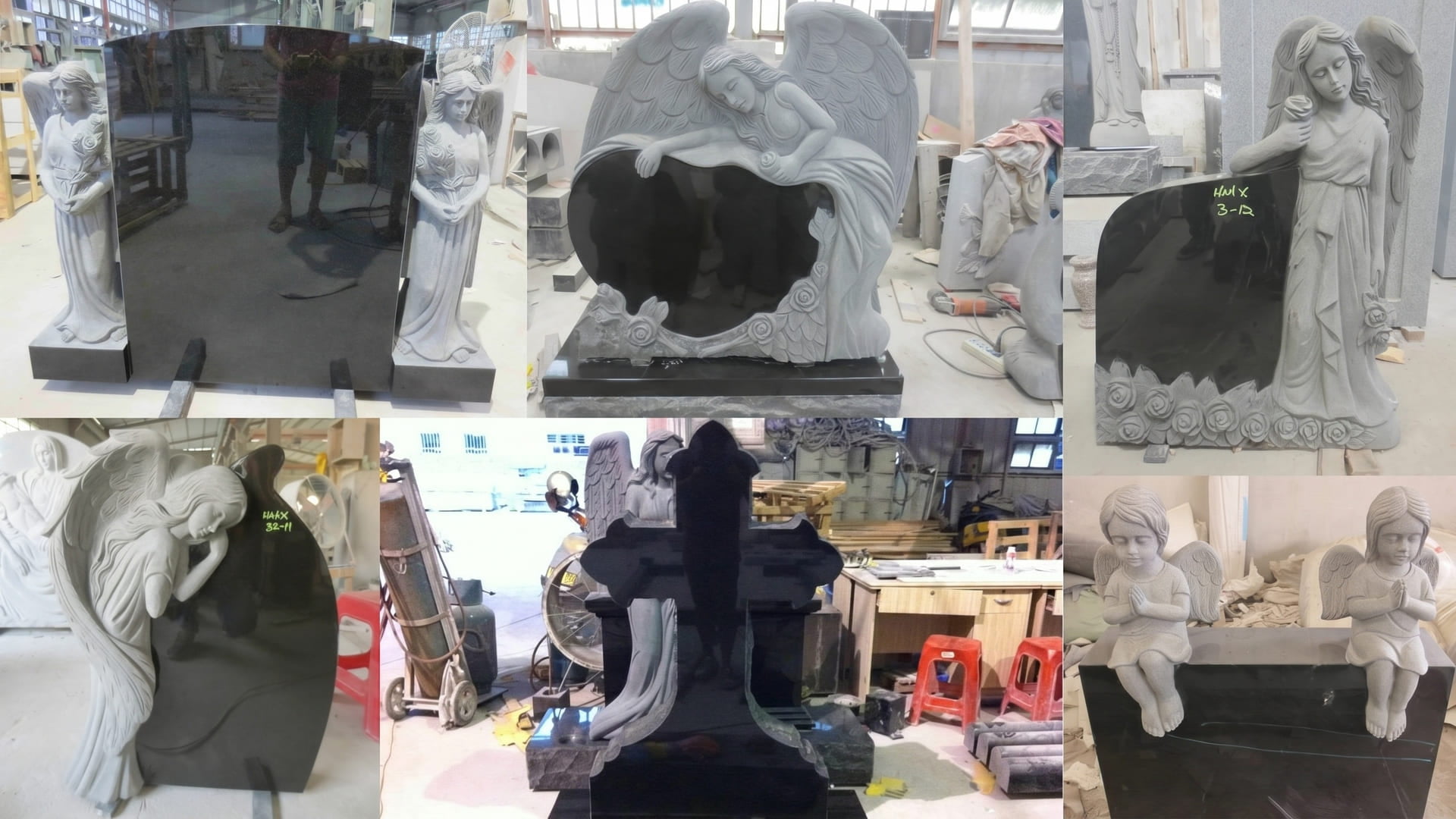
Avoid descriptions such as “black granite with a portrait” as the entire specification. Record the commercial material name, the exact face to receive decoration, the sample reference and any proposed color enhancement or lettering treatment. If the material changes, revisit the appearance approval.
For an unfamiliar combination, request a representative sample using comparable stone, finish and artwork. A lettering sample cannot demonstrate portrait quality. Equally, a photograph of a finished portrait cannot establish a contractual engraving depth.
When comparing samples, examine the details that matter in the actual design: readable dates, open spaces within letters, facial features and separation between neighboring tones. Agree whether photographs are sufficient or whether the decision needs a physical reference.
How long does laser etching last on a headstone?
The sources used here do not establish one service life that applies to all laser-etched granite memorials. They also do not establish a universal durability winner. The fact that one treatment is shallower than another does not by itself prove how long either finished design will remain satisfactory.
Request material-specific care information, disclosure of added treatments and the applicable warranty terms. Ask what evidence supports any lifespan claim. A sample demonstrates appearance at the time of review; it does not prove decades of outdoor performance.
Keep this question separate from whether the artwork can be produced clearly today. Both matter, but they need different evidence.
What should be approved before production?
Use separate records for layout and appearance. A digital proof should identify spelling, dates, placement, component dimensions and the treatment assigned to each area. For an upright memorial, distinguish the tablet from its base. StoneMemo’s drawing and lettering approval guide provides the broader drawing checklist.
The appearance record should identify the accepted sample and the features being judged against it. If depth matters contractually, ask the supplier to propose an achievable value, tolerance and inspection method. There is no useful universal depth figure to add to every order.
Before releasing the drawing, check that:
- The process is named for every text, image and decorative area.
- The granite and decorated finish match the accepted reference.
- Any difference between the sample and ordered piece is recorded.
- The approved drawing revision is unambiguous.
- Material or artwork substitutions trigger another review.
- Care information and warranty terms match the proposed treatment.
These are procurement recommendations, not a claim about an established factory inspection procedure. They give both parties a clearer description of what is being ordered.
For a trade specification discussion, share the proposed drawing with StoneMemo, including the material, finish and intended lettering or image effect.