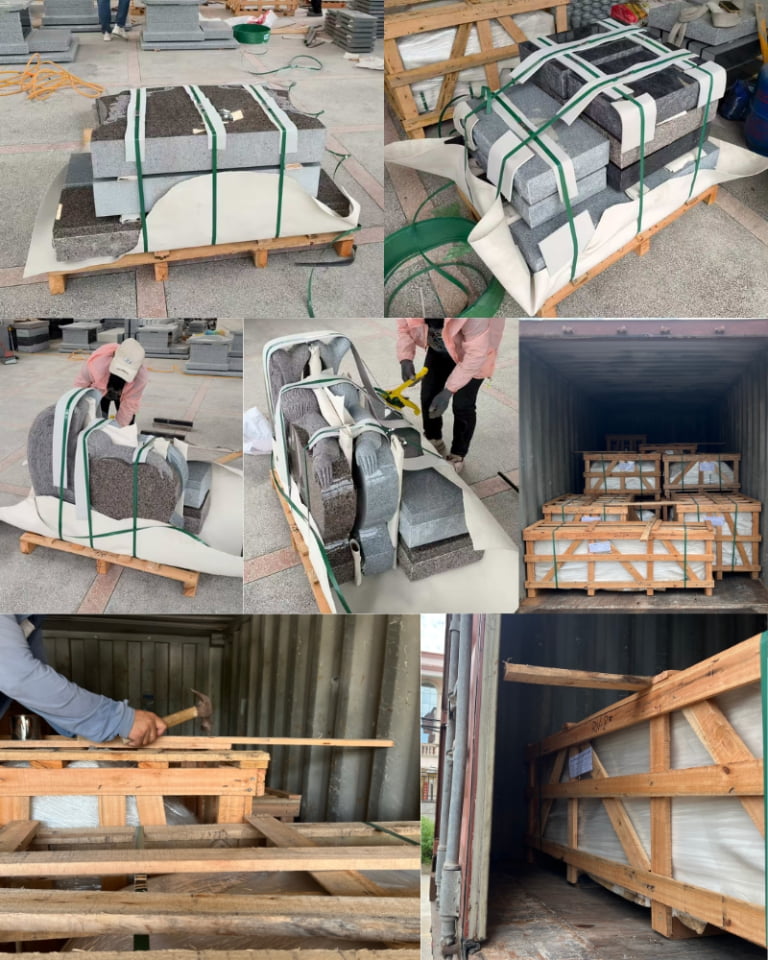


A wholesale monument lead time should be managed as a chain of dated milestones, not one number. Before a dealer commits inventory or a project date, the order record should define the schedule trigger, material status, production target, inspection and packing release, freight milestones, and the final handoff at the dealer yard. A factory completion estimate is not a delivery date.
This matters for custom monuments, mixed restocks and imports. Two suppliers can quote similar “lead times” while one stops at production completion, another at dispatch, and another at a named delivery point. Compare them only after their starting and finishing events are defined.
What Does a Wholesale Monument Lead Time Include?
For procurement, lead time is the interval between two agreed events. “After approval” should identify the approved document and revision. “Ready” should state whether the stone has finished production, passed inspection, been packed, or reached the delivery point.
Use a milestone schedule such as this one:
| Milestone | Evidence to record | Schedule question |
|---|---|---|
| Commercial release | Accepted purchase order, payment status and agreed terms | What event authorizes the supplier to begin? |
| Drawing approval | Dated final drawing with an unambiguous revision | Does a later change reopen the schedule? |
| Material readiness | Confirmation for the specified granite, color, size and quantity | Is material allocated, available or still subject to another step? |
| Production | Order-specific status against the approved specification | What work remains before inspection? |
| Inspection release | Inspection record and written disposition of any issue | Has the order been accepted for packing? |
| Packing release | Crate list, packed dimensions, gross weights and identifiers | When is the shipment ready for collection? |
| Transport and yard handoff | Booking or tracking record, named destination and receiving plan | Which event counts as dealer delivery? |
Owners may differ by order. The table lets the dealer, supplier and logistics provider use the same evidence instead of giving “in production” or “shipping soon” different meanings.
When Does the Lead-Time Clock Start?
The clock starts at the trigger named in the supplier’s written terms for that order. It might be acceptance of the purchase order, receipt of payment, approval of the final drawing, confirmation of all production information, or a combination of those events.
A first proof is not a production-approved drawing. Record the final revision, approval date and approver. If the dealer changes lettering, dimensions, finish or accessories after approval, ask which completed work is affected and obtain a revised milestone schedule. Do not add assumed days to the old date.
Everlife Memorials publishes a usual 6–10-week production period for its headstones, grave markers and granite benches from receipt of a signed layout proof, with stated exceptions and tentative timing. That is a useful example of a supplier defining its own trigger and scope. It is not an industry average, an international transit estimate or a StoneMemo commitment.
StoneMemo’s drawing and lettering approval guide lists the information a trade buyer should reconcile before releasing a drawing.
How Should Stock and Custom Orders Be Compared?
“Stock” can mean raw material, a shaped blank, an undecorated component, or a packed item ready for dispatch. Ask what is physically available and what work remains. A catalogue image or stock code does not establish dispatch readiness.
For a custom order, confirm whether material preparation remains after drawing approval. For a mixed restock, separate ready and custom items, then decide whether the shipment waits for the full order or moves in agreed lots.
Do not compare a ready-stock dispatch estimate with a custom production estimate as if they cover the same purchase. A clean comparison states:
- the products and quantities covered;
- the exact schedule trigger;
- the milestone where the estimate ends;
- the dependencies still open; and
- whether the items are expected to move together.
What Happens Between Production and Packing Release?
Production completion should lead to a defined inspection and packing decision. Record the approved specification being checked, any departure and who can accept a correction or substitution. Keep an open issue visible instead of carrying forward the old shipping date.

Packing creates a second set of planning data. The final crate count, package identifiers, packed dimensions and gross weights may differ from the stone-only specification. These datails affect freight booking, container planning and the receiving method. For a mixed order, connect every crate identifier to the purchase order and approved drawing revision.
If the order will move by container, use the granite monument container-loading checklist before quantities are frozen. It addresses payload and item-priority decisions that should be settled before the shipment schedule is treated as firm.
How Do International and Domestic Transport Change the Schedule?
Keep production and transport as separate sections of one order record. For an international purchase, applicable milestones may include cargo-ready confirmation, booking acceptance, collection, departure, expected arrival, destination release and inland delivery appointment.
For a domestic shipment, the chain may be shorter, but the same rule applies: dispatch, carrier movement and dealer-yard handoff are different events. The named destination, included service and receiving conditions should appear in the freight record. An estimated arrival window should not be presented as a confirmed receiving appointment unless the responsible party has accepted it.
FreightCenter’s headstone shipping overview discusses protective packaging, freight transport and delivery locations that may lack a dock or forklift. It can help a dealer identify questions for a carrier, but it does not define the terms or timing of another shipment.
What Counts as Delivery to the Dealer Yard?
Dealer delivery is the documented handoff at the named receiving location under the agreed freight service. It should identify the delivery reference, package count, visible condition, receiver and any exception recorded at handoff.
Before dispatch, confirm:
- the actual service entrance and receiving hours;
- appointment and contact requirements;
- access limits disclosed by the receiver;
- the equipment and qualified personnel planned for unloading;
- the purchase order, packing list and crate map available to the receiving team; and
- the procedure for recording package-count differences or visible damage.
Receiving the crates does not prove that every enclosed stone surface has been inspected. Record what was visible at handoff and follow the applicable supplier and carrier procedures for further inspection and any exception report.
How Should a Dealer Track a Delayed Monument Order?
Ask for the last completed milestone, its completion evidence, the current dependency, the owner of the next action and the next dated update. This produces a usable answer even when a final delivery date cannot yet be confirmed.
Please confirm the latest completed milestone and its date, the item currently holding the schedule, and who owns the next action. Please provide the next expected milestone and say whether its date is estimated or confirmed. If the previous target has changed, please issue the revised downstream milestones through dealer-yard handoff.
The next update date is part of the schedule. It is not a substitute for a delivery promise, but it prevents an open dependency from disappearing between production, freight and receiving teams.
Wholesale Monument Lead-Time RFQ Checklist
Before accepting a lead-time quotation, confirm that it states:
- the products, quantities and drawing revisions covered;
- the event that starts the quoted period;
- current material or stock readiness;
- the event where the estimate ends;
- inspection and packing milestones;
- transport stages included and excluded;
- the named dealer-yard handoff point and receiving conditions; and
- how schedule changes and revised dates will be documented.
Professional buyers can send StoneMemo the product list, drawing status, destination and required handoff so the production and delivery milestones can be reviewed as one order plan.